How to Stop Rainwater from Pooling Around Your Home
Dealing with water pooling around your house after a heavy rain can be a real headache. It’s more than just a puddle; it can mean trouble like poor yard grading, drainage issues, or compacted soil. If left unchecked, this can lead to foundation problems, damage to your yard, and a perfect breeding ground for pests. Don’t worry, though. With the right know-how, you can tackle this issue, starting with understanding how your yard is shaped and how water flows across it.
This guide will help you figure out why water pools, how to find the real cause, and what steps to take to keep your home safe in the long run. We’ll also show you how services like grading, ground excavation, and trenching can help make your yard drier and safer. Plus, understanding how local rules about runoff and stormwater work, like those from the U.S. Environmental Protection Agency, can be handy. The goal? Make sure your yard handles water well every time it rains.
Why Does Water Pool Around Houses After Heavy Rain?
It Starts with the Right Slope
A well-graded yard should slope away from your house, guiding rainwater away from the foundation. Even a slight slope issue can cause big problems during heavy rain. If the soil settles or if a landscaping project changes the surface level, water might start collecting in low spots near your home.
Many folks don’t realize that a yard doesn’t need to look steep to work well. A gentle but consistent slope is often enough to redirect stormwater. Without that slope, rainwater will find the easiest path, which might be right up against your foundation or along your walkway.
Gutters and Downspouts Can Add to the Problem
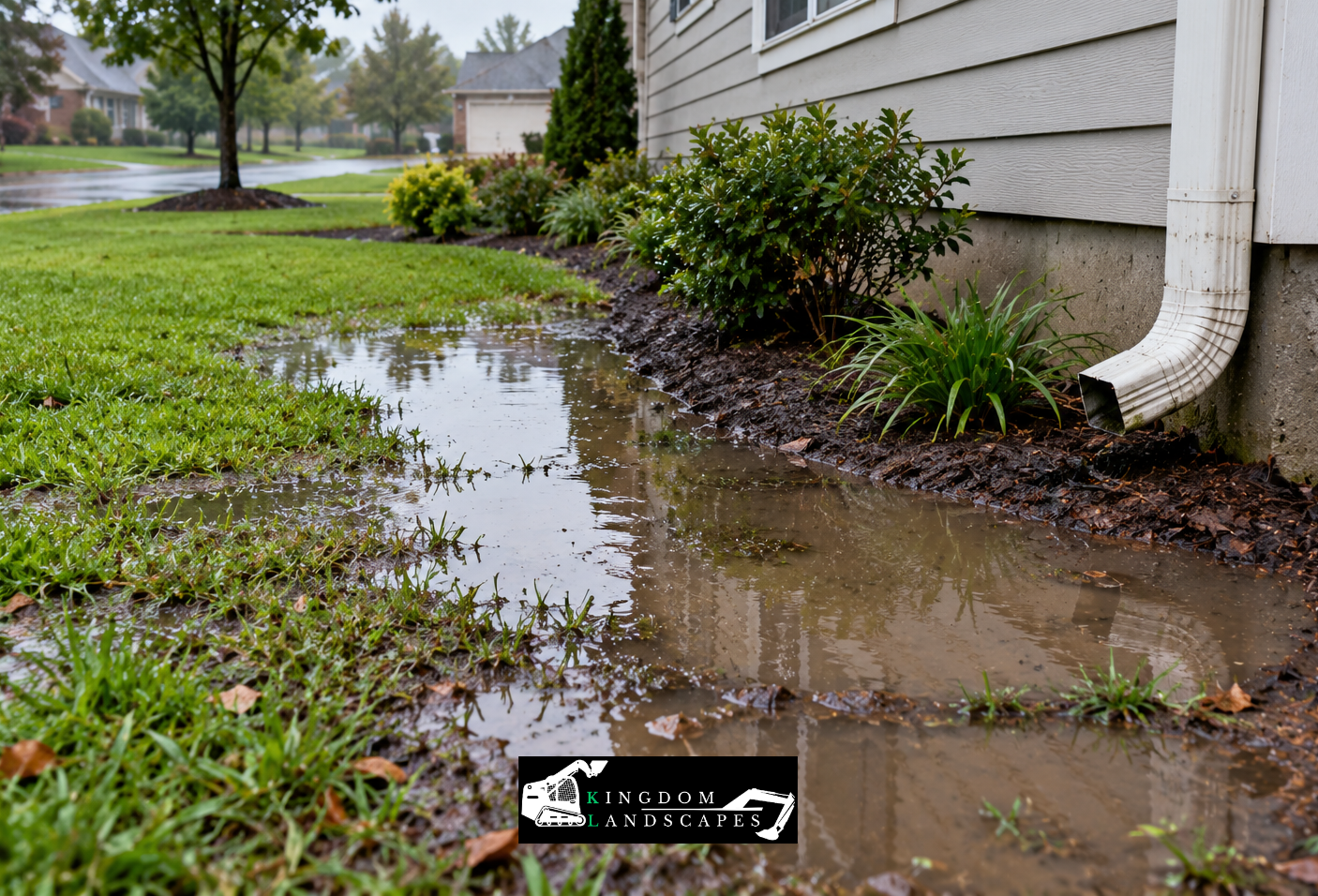
Even if your yard is mostly level, too much water from your roof can create pooling near your home. Gutters and downspouts are supposed to carry water away, but if they’re not positioned right, they can overload the soil. During a downpour, even a small roof section can produce a surprising amount of water.
Planning where this water goes is crucial. Sometimes, a full landscape overhaul isn’t needed; just redirecting roof water can solve the problem. Using extensions, splash blocks, or trenching can help manage this runoff better. If you’re unsure, a professional can help find the best path for excess water.
Compacted Soil and Heavy Clay Don’t Help
Some yards are just challenging to drain. Clay-heavy soil, common in many areas, drains slowly and stays wet longer. If this soil is compacted by foot traffic or vehicles, it can act like a bowl, holding water instead of letting it soak in. So even after a storm, your yard might stay soggy for days.
The USDA Natural Resources Conservation Service notes that both soil structure and slope affect how water moves across land. That’s why drainage issues can differ greatly even between neighboring properties. Knowing your soil type and how it reacts to rain is crucial in solving pooling problems for good.
Signs Your Yard Grading Needs a Checkup
Standing Water After Storms
The easiest sign to spot is standing water that sticks around long after the rain has stopped. Small puddles might not seem like a big deal, but if they keep forming in the same spot, your ground probably isn’t shedding water properly. If these puddles are near your foundation or walkways, it’s time to take a closer look.
Also, notice how quickly water drains after light versus heavy rain. A yard that’s slow to drain might have a slope or soil issue. If it only happens during big storms, your slope might be almost good enough but not quite right for heavy runoff. Watching how water behaves gives you important clues.
Soil Erosion and Exposed Roots
Poor grading often shows up as erosion. If rainwater moves too fast, it can wash away topsoil, expose roots, or carve channels in your lawn. Over time, this makes drainage problems worse because the ground becomes uneven.
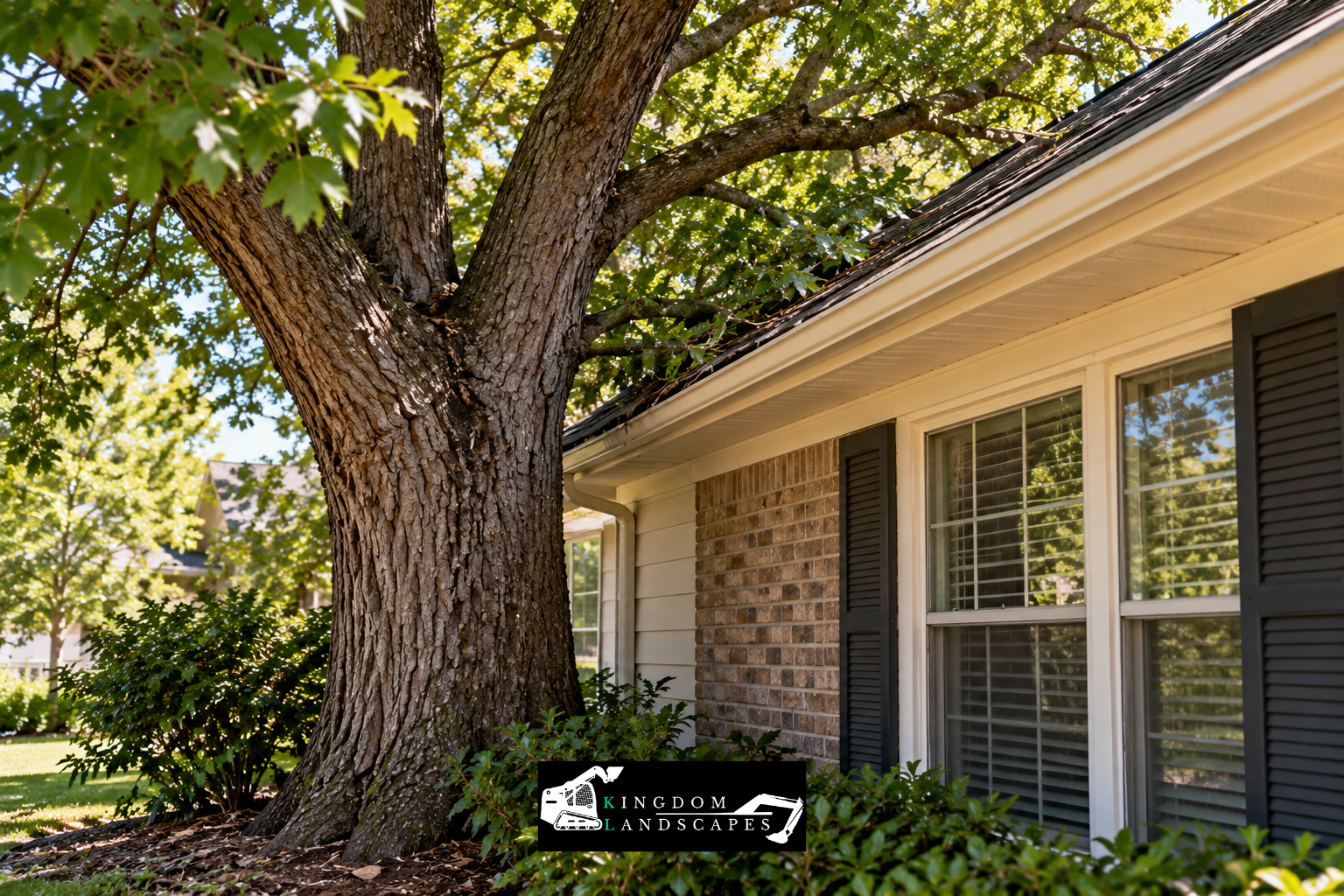
For properties with mature trees, drainage and root health go together. When grading needs improvement, check the surrounding vegetation too. Sometimes, pruning and trimming trees can reduce canopy density and help the area dry more evenly. If trees are already damaged, removing stumps might be necessary.
Water Getting Into Your Foundation
When grading isn’t working, water can start affecting more than just your yard. Be on the lookout for moisture in crawl spaces, damp basement walls, or cracks in mortar. These aren’t always caused by grading alone, but poor slope can make these issues worse. The sooner you address the yard, the less likely you are to face costly repairs later.
Sometimes, homeowners wait until they see water inside before taking action. By then, the problem has often been growing for a while. It’s more efficient to fix drainage issues before they become a bigger problem.
How Poor Grading Affects More Than Just Water Flow
Pressure on Your Foundation
Water pooling near a foundation can increase pressure, pushing moisture against your walls. Over time, this pressure can cause cracks and seepage. Even if your home hasn’t shown visible damage, frequent saturation can weaken the area around your foundation. That’s why grading is often seen as a preventive measure.
Building guidance from the Federal Emergency Management Agency highlights the importance of directing water away from structures. A well-graded yard is one of the simplest ways to reduce risk before storms cause damage.
Damage to Your Lawn and Landscape
Poor drainage can ruin your lawn as quickly as it can harm structures. Grass needs oxygen, and waterlogged soil deprives roots of the air they need. When water sits too long, your lawn might thin out or turn yellow. In shaded areas, too much moisture can also invite fungus and moss growth.
Plants in low spots may struggle too. Shrubs can rot, and ornamental beds might wash out. Over time, the whole yard can look neglected even though the issue is below the surface. Fixing the grade often leads to a noticeable improvement in both function and appearance.
Safety Concerns Around Walkways
Pooling water can create slippery surfaces around steps and driveways. If it freezes, the risk becomes even more serious. Muddy paths make it harder to mow or walk pets. For families with kids or older adults, reducing standing water is an important safety step.
Sometimes, the drainage issue is tied to a larger layout problem. If water flows toward a driveway or path, it might need a more complete plan, including reshaping the surface. That’s why professional evaluation is helpful: the fix should match the whole site.
What Goes into a Professional Grading Solution?
Site Evaluation
The first step is understanding how your property drains. A good evaluation looks at elevation changes, soil type, and the location of trouble spots. Professionals may use tools to see where your yard holds water and how much correction is needed.
This step is crucial because not every low spot needs the same fix. Some properties need just a simple regrade near the foundation, while others need larger reshaping. A complete assessment helps avoid guesswork and prevents repeat failures.
Reshaping the Yard
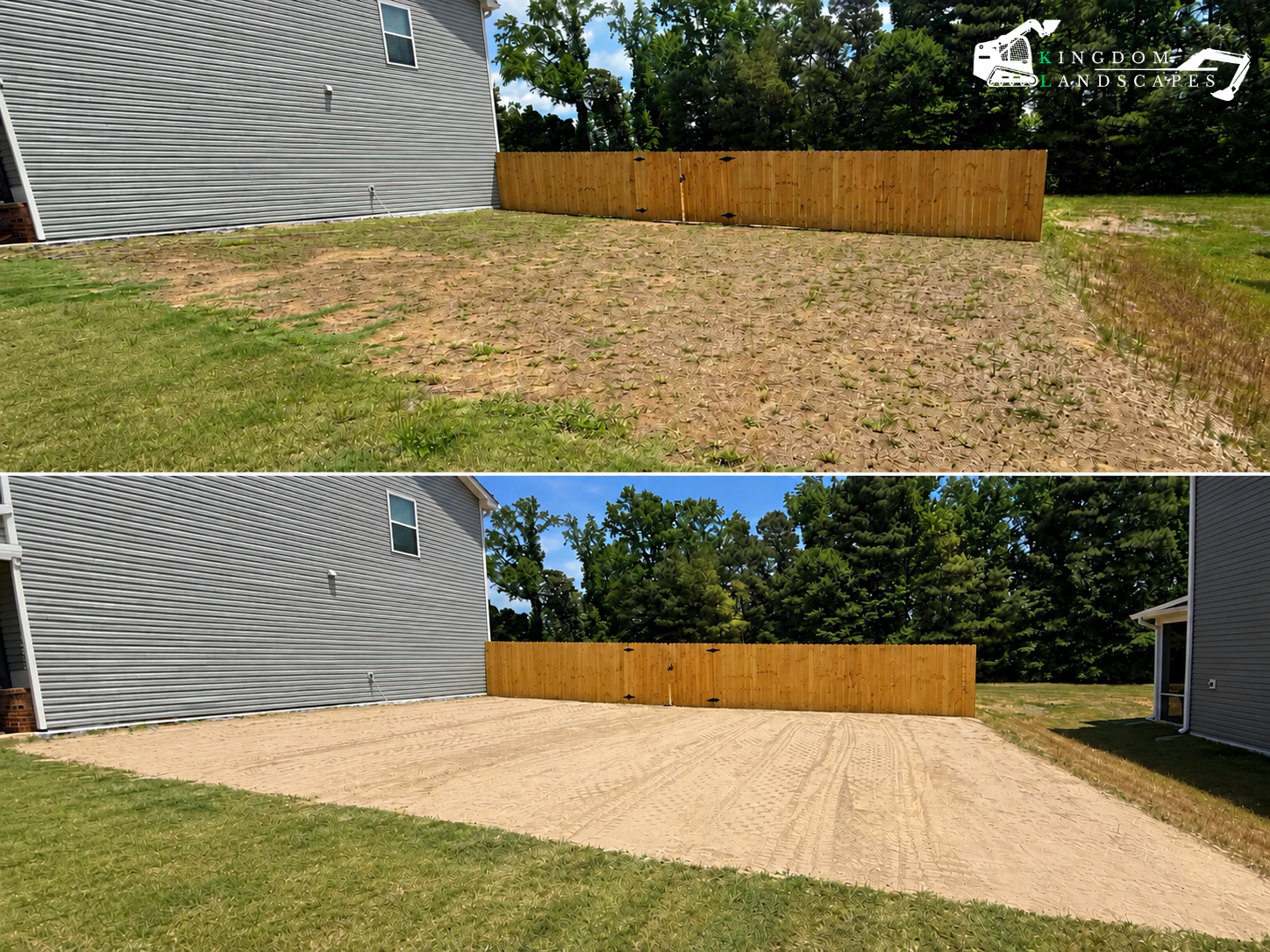
Once problem areas are identified, the yard can be reshaped so water naturally flows away from the house. This can involve moving soil, reducing low areas, or building up key sections. The goal is to create a consistent slope that handles rain without causing erosion.
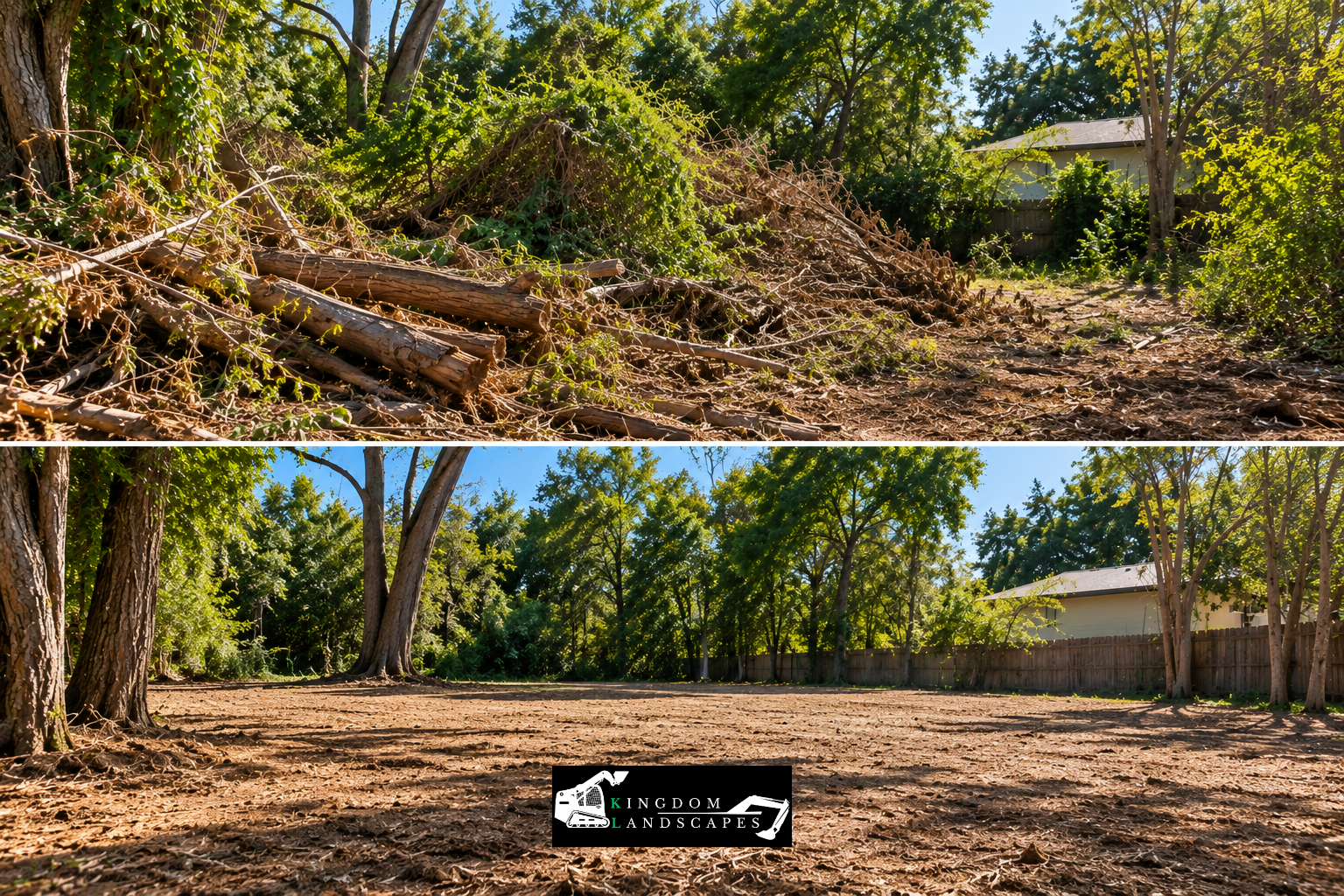
For larger properties, land clearing might be needed before grading can start. If overgrowth or debris is hiding the true surface condition, clearing the site helps you see what needs to change. On properties with heavy buildup, debris removal can support a cleaner grading process.
Adding Drainage Features
Sometimes grading isn’t enough, especially if your property gets runoff from neighboring lots. In those cases, grading might be paired with drains or trenching to move water more efficiently. A shallow swale can guide runoff, while a buried line can carry excess water away.
Trenching services can help when you need drainage lines or controlled water movement in a limited area. The right feature depends on your soil and lot size, but the idea is the same: don’t let water sit where it can cause damage.
DIY Fixes vs Professional Help
What You Can Do Yourself
Some drainage issues can be reduced with basic maintenance. Cleaning gutters, extending downspouts, and removing surface debris can all help water flow more predictably. Small adjustments can also improve minor depressions if the problem isn’t too close to the house.
However, DIY fixes have limits. It’s easy to move soil in the wrong direction or create a new low point. If you’re unsure about the slope, you might solve one problem while creating another. That’s why light maintenance and full grading correction should be treated differently.
Why Professional Grading is Better
Professionals bring equipment, experience, and a better understanding of how water behaves over time. They evaluate the site as a whole instead of focusing on one wet spot. That broader view matters because drainage issues often involve multiple causes at once.
Professional grading also reduces the risk of overcorrecting. Too much slope can cause erosion or push water to another area. Precision is key. If you want a lasting solution, a professional approach is usually the better investment.
How to Troubleshoot Water Pooling Around Your House
1. Watch the Water Path After Rain
Start by watching where water collects during and after a storm. Note the first puddles, the direction of flow, and how long the area stays wet. Photos taken during and after rain can be helpful when you talk with a grading professional. This simple observation can reveal whether the issue starts at the roofline or a low spot near the foundation.
2. Check Gutters and Downspouts
Next, inspect roof drainage. Look for clogs or short downspout extensions. If water lands too close to the house, it may saturate the soil before dispersing. Even a perfectly graded yard can struggle if too much water dumps into one spot.
3. Test the Ground
Walk your property and feel for spongy or uneven soil. Soft areas can indicate poor compaction or hidden low spots. If the ground feels unstable near your home, don’t ignore it. Surface problems often hint at more serious issues below.
4. Get a Professional Opinion
If the issue keeps returning, a professional assessment is the fastest way to avoid trial and error. An experienced crew can tell whether you need grading, excavation, or drainage improvements. Often, the best solution is a coordinated plan that addresses all contributing factors.
When Yard Grading Should Be Paired with Other Services
Tree Work and Cleanup
Sometimes poor drainage gets worse because of roots or dense overgrowth that blocks access and traps moisture. Clearing that material might be necessary before reshaping can begin. Combining grading with tree pruning or full cleanup work can make the solution more effective.
Excavation for Deeper Problems
Some yards have issues deeper than the surface. Buried clay or compacted fill can stop water from moving naturally. In these cases, ground excavation may be needed to remove problem material and rebuild the site. This is common on lots with years of patchwork repairs or construction activity.
Combining Clearing, Grading, and Drainage
The best results come from treating the site as a whole. Clearing removes obstacles, grading restores slope, and drainage features move water safely away. When coordinated, your yard becomes easier to care for and less likely to flood. That’s why many choose a single service plan instead of addressing each symptom separately.
Frequently Asked Questions About Yard Grading and Pooling Water
How Much Slope Should My Yard Have?
There’s no one-size-fits-all answer, but generally, the ground should slope away from the foundation to prevent standing water. The exact amount depends on your lot and soil. A professional can recommend the right correction.
Will Adding Dirt Fix the Problem?
Not always. Adding dirt without understanding the drainage pattern can create new low spots. Sometimes, the added soil settles over time, bringing the problem back. Correct grading is about shape and direction, not just adding material.
Can Poor Grading Damage My Foundation?
Yes, repeated water near the house can increase moisture pressure and cause long-term damage. Early correction is the smartest way to reduce risk and protect your home.
How Do I Know If I Need Grading or Drainage Repair?
Many properties need both. If the yard is uneven, grading may be the core issue. If the slope is okay but water lingers, the problem may be with gutters or poor outlet placement. A site evaluation can determine the right solution mix.
Take Action Before the Next Storm
If water pools around your house after heavy rain, it’s a sign your yard isn’t draining properly. The issue might start with poor grading, but it can involve gutters, soil compaction, or other factors. The key is to fix it before the next storm makes things worse. A well-graded yard protects your foundation and improves safety.
Ready for a real solution? Let Kingdom Landscapes evaluate your site and recommend the next step. Whether you need grading, excavation, or clearing, a coordinated approach makes a big difference. Learn more about our grading services or contact us to discuss your needs. For a cleaner, safer yard, start with the ground beneath your feet.
Call (919) 701-8105 or email contact@Kingdom-Landscapes.com to get started. Visit us at 2603 Abattoir Rd, Coats, NC 27521, USA to learn more about protecting your home from pooling water and drainage problems.