Why Drainage Problems Are a Big Deal
Water can be a nightmare if it ends up where it shouldn’t. A soggy lawn, water pooling near your foundation, or a washout along your driveway might seem minor at first, but they can quickly lead to expensive repairs. If you're thinking about improving your site, trenching could be a game-changer, helping to steer water away before it causes trouble.
Drainage issues aren’t just about looks. Too much moisture can weaken your soil, cause erosion, attract pests, damage your landscaping, and shorten the life of your structures. In places with lots of rain, clay-heavy soil, or low spots, water can pile up fast. According to the U.S. Environmental Protection Agency, stormwater runoff poses a big threat to both homes and businesses if it’s not managed properly. Early action is key.
While a trench isn't the only fix, it's often an effective part of a bigger drainage strategy. Designed right, a trench can guide water away from trouble spots, support underground drainage systems, and boost your property's overall performance. If reshaping is also needed, grading services can be combined with trenching to create a more water-friendly surface.
Spotting Drainage Issues on Your Property
Puddles That Stick Around
If water is lingering on your lawn hours or even days after rain, you probably have a drainage issue. Short-term puddles after a heavy storm are normal, but if the water sticks around, it means your soil isn’t draining right. This can mess up your turf, create mud tracks, and make your yard less usable.
Soil Erosion and Bare Spots
When runoff moves quickly, it strips away topsoil, leaving behind uneven patches. These bare spots can worsen over time, especially if water keeps flowing over the same area. Erosion can also expose roots, undermine sidewalks, and damage retaining walls.
Water Near Foundations or Crawl Spaces
If water gathers near your house, that’s a major red flag. It can seep into crawl spaces, stress concrete, and lead to long-term maintenance headaches. The Federal Emergency Management Agency says managing water around buildings is crucial to reducing flood damage, even if you’re not in a flood zone.
How Trenching Can Fix Your Drainage Woes
Redirecting Water Before It Pools
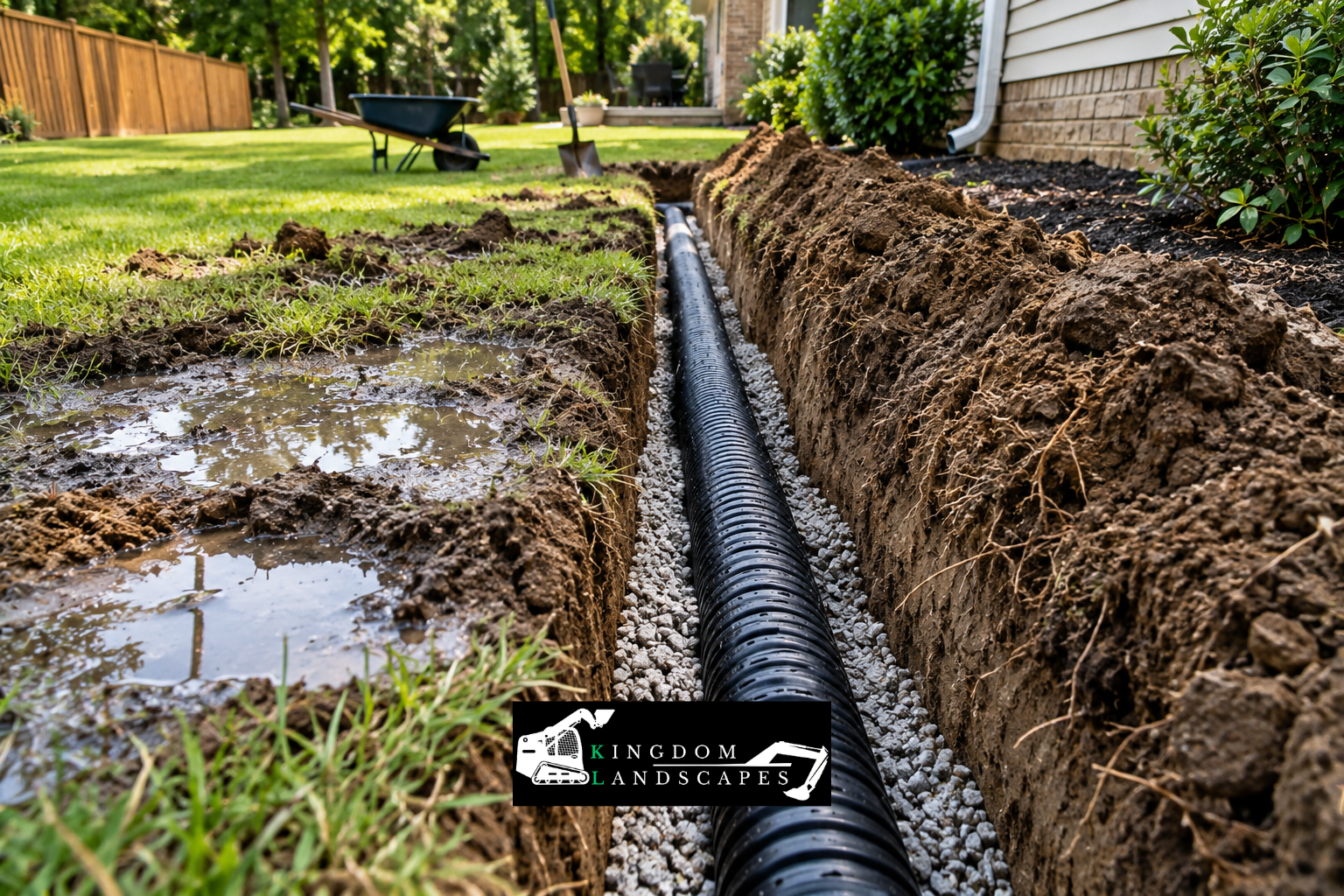
A trench can work like a pathway for excess water. Instead of letting runoff spread, a strategically placed trench guides it. This is handy for properties where the slope pushes water toward a house, shed, driveway, or low-lying corner.
Supporting French Drains and Utility Lines
Trenches can be more than open channels. Many drainage systems use trenches to support French drains, perforated pipes, or other subsurface solutions. By moving water below the surface, the trench prevents visible pooling and protects the area above. For deeper projects, ground excavation may prep the area before installing the drainage system.
Creating a Cleaner, More Stable Property
Trenching does more than move water; it helps stabilize your property over time by reducing saturation in problem areas. Less moisture means fewer muddy walkways, healthier lawns, and less damage to hardscapes. When paired with debris & brush removal, trenching makes it easier to keep flow paths clear and prevent blockages.
When a Trench Makes Sense
Low Spots That Collect Water
Some properties have natural low spots that act like bowls, collecting water after storms. A trench can help by intercepting the runoff and moving it to a safer outlet.
Driveways, Walkways, and Hardscapes
Concrete surfaces can be tricky if they aren’t sloped correctly or if the surrounding soil settles. Water running along driveways or walkways can cause cracks and sinking. Combining trenching with concrete work can fix the problem and improve durability.
New Construction and Site Prep
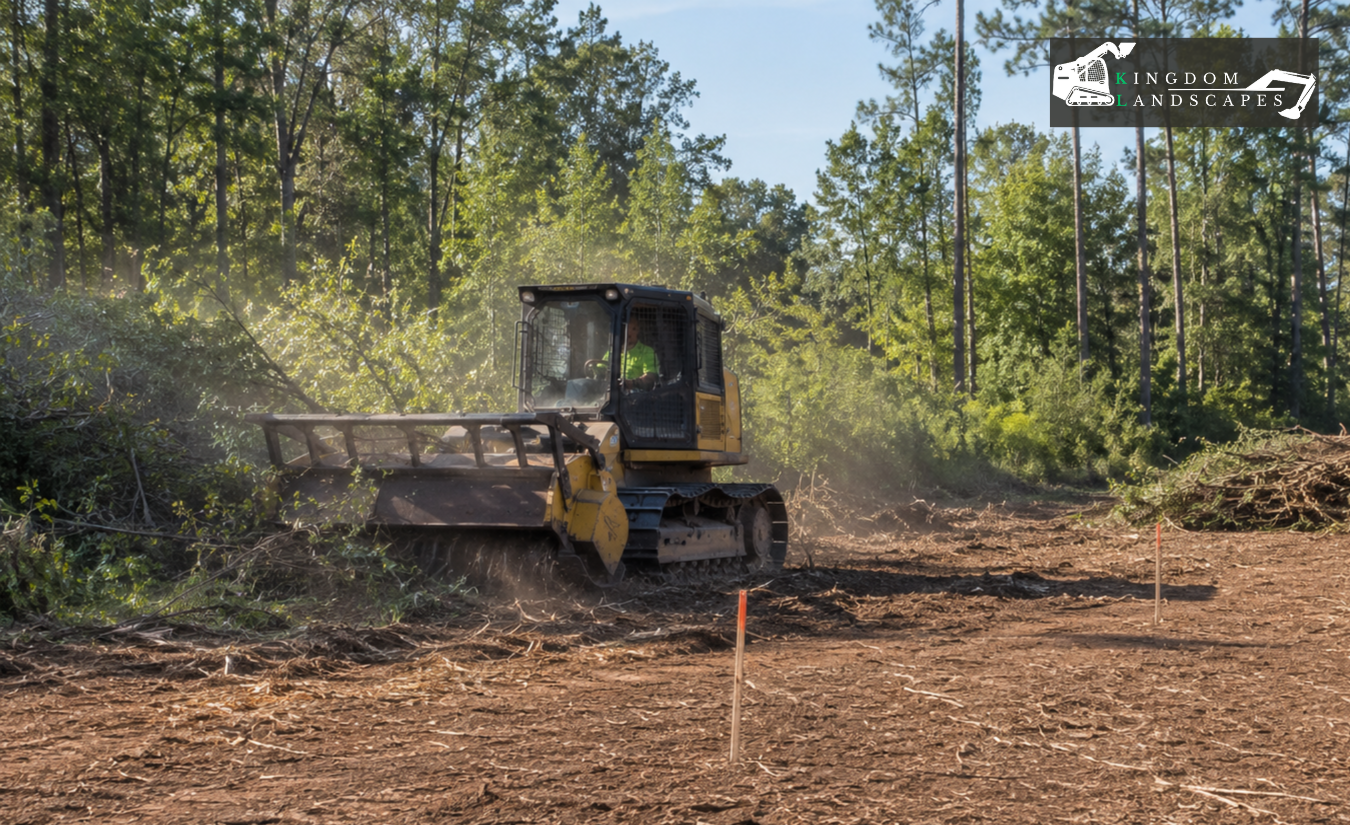
It’s smart to think about drainage before finishing a project. During new builds or major landscaping work, installing a trench while the site is open makes sense. This is the best time to tackle grading, runoff flow, and utility routing. For bigger changes, land clearing can provide the space for a clean drainage layout.
Planning a Solid Drainage Trench
Finding the Right Path
The success of a trench depends on more than just digging a line. It must follow the natural water movement, avoid obstacles, and lead to a good exit point. A poor layout can trap water, create new wet spots, or send runoff to your neighbor’s yard, so planning is crucial.
Getting the Slope Right
Slope matters because water needs a steady path. Too little slope, and the trench won’t drain well. Too much, and it could cause erosion. Pros use experience and tools to keep the grade balanced.
Choosing the Right Materials
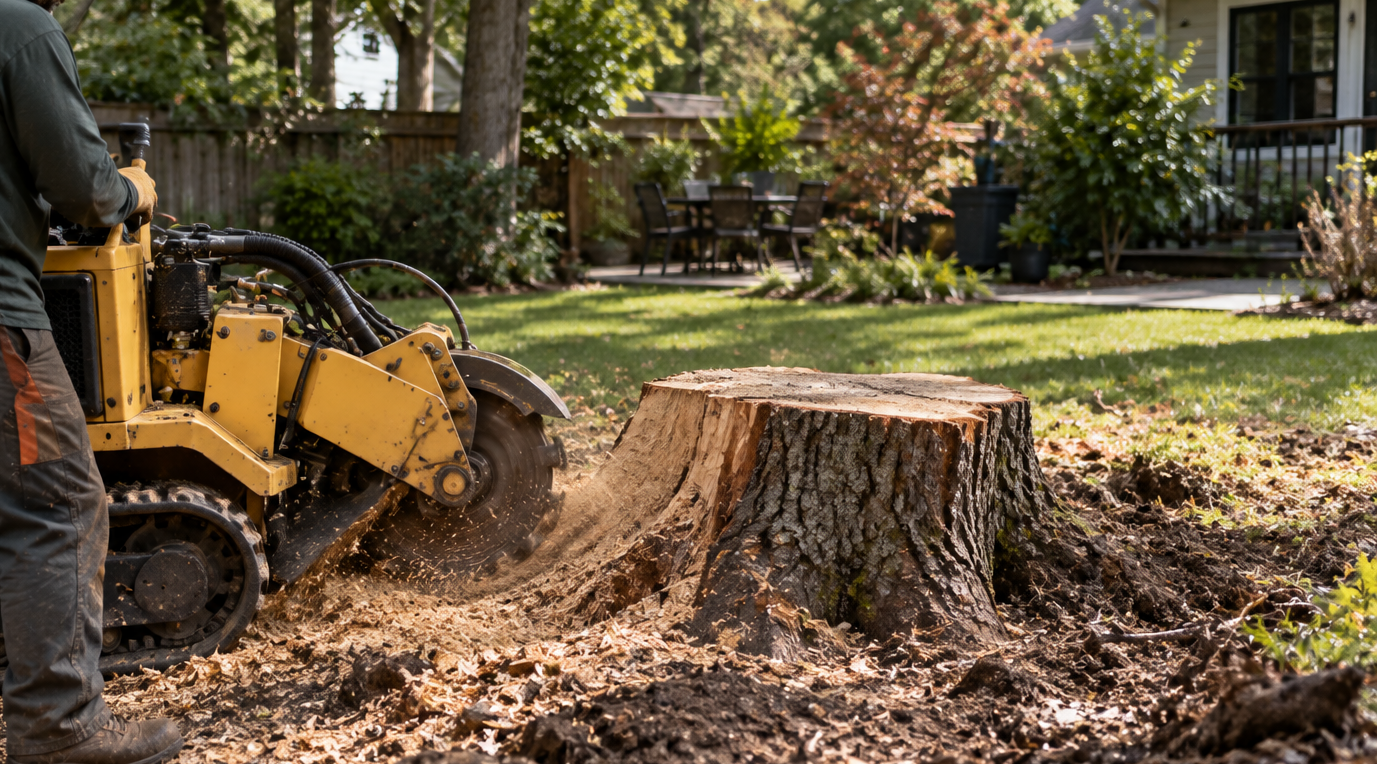
The trench might include gravel, filter fabric, pipe, or a mix of these. These materials help water move efficiently, reduce clogs, and keep structure. If roots or buried obstacles are nearby, tree and stump removal might be needed before installing the trench.
Why DIY Drainage Fixes Often Fail
Hidden Utility Lines and Site Hazards
Digging without a plan is risky. You could hit utility lines, irrigation systems, old footings, or debris. Striking the wrong line can lead to safety issues and costly repairs. That’s why professional trenching is safer and more efficient than DIY digging.
Temporary Fixes Don’t Last
Some folks try fixing drainage with shallow ditches or quick patches. These might help briefly, but they usually fail with the next heavy rain. Long-standing drainage issues often need a more durable solution.
Wrong Drainage Can Worsen Problems
One of the biggest risks of DIY drainage work is misdirecting water. If runoff is redirected without a good plan, it might cause erosion elsewhere or worsen flooding near another structure. The USDA Natural Resources Conservation Service advises that effective water management should work with the land’s natural conditions, not against them.
Benefits of Professional Trenching for Long-Term Success
Precision Layout and Site Awareness
A professional trenching plan starts by observing the whole property. This includes looking at elevation changes, soil type, and existing structures. This approach helps ensure the trench works with the land instead of creating a new problem.
Integrated Property Solutions
Drainage issues rarely stand alone. Overgrown brush, poor grading, and compacted soil can all make water control harder. That’s why drainage work is often more effective when combined with trenching services, grading services, and sometimes debris & brush removal. These services together make your property easier to maintain and more resistant to future issues.
Cleaner Results After the Work
An advantage of working with pros is that they complete the job with cleanup and site restoration in mind. The trench isn’t just dug and left; the area is shaped to look intentional and function right. This detail matters if you want your drainage fix to improve the property without making it look like a construction zone.
Real-Life Trench Drainage Fixes
Backyard Flooding Near a Patio
Picture a backyard where rainwater always pools beside a patio. The area gets muddy, furniture sits in dampness, and the concrete edge starts settling. Here, a trench uphill from the patio can catch runoff before it hits the low point, protecting the patio and lawn.
Driveway Edge Washout
Consider a gravel or concrete driveway with a side slope that keeps washing out. Rain carries soil and small stones downhill, thinning the driveway edge. A trench, paired with grading, can slow the flow and direct it to a controlled outlet.
Problem Areas Around New Builds
During construction, the ground is often disturbed, changing water movement. A trench can manage drainage while the site is still open, especially when paired with excavation, grading, and utility planning. This approach saves money later by preventing major fixes after landscaping.
Drainage Planning Tips for Owners
Walk Your Property After Rain
To understand your drainage issue, check out your yard during or right after a storm. Look for puddles, moving water, soggy soil, and areas where runoff cuts into the ground. These clues show you where water flows and where a trench might help.
Watch for Recurring Patterns
If the same yard corner gets wet every time or the same soil strip erodes after each storm, that pattern is telling you something. Recurring issues usually mean land is directing water that way. Fixing the source is better than patching symptoms repeatedly.
Consider the Whole Site
Drainage connects across the whole property. A low spot in the backyard might be caused by roof runoff, driveway slope, or compacted soil. That’s why smart drainage work often includes more than one solution. If the site also needs clearing or reshaping, services like land clearing and ground excavation can support a larger plan.
FAQs About Drainage Trenches
How do I know if I need a trench?
If your property consistently holds water, develops erosion channels, or sends runoff toward your foundation, a trench might help. The best indicator is repeated water behavior after normal rain, not just after one heavy storm. A site assessment can determine if trenching is right for you.
Will a trench solve all drainage problems?
Not always. Some issues are due to compacted soil, poor grading, or clogged downspouts. These might need to be fixed alongside trenching. A trench works best as part of a complete drainage strategy.
How deep should a drainage trench be?
Depth depends on the amount of water, land slope, and whether the trench supports a pipe or gravel system. A shallow trench might work for minor runoff, while a deeper trench is needed for bigger problems. Exact depth should be based on your site conditions.
Can trenching help prevent foundation damage?
Yes, if it’s installed correctly and used to direct water away from vulnerable areas. Reducing moisture near the foundation lowers the risk of seepage, soil movement, and structural stress.
Why Choose Kingdom Landscapes
If drainage problems are affecting your property’s usability and safety, working with a team who knows ground conditions, site prep, and water movement can make a difference. Kingdom Landscapes is a veteran-owned, family-run company offering professional, affordable service. Whether you need trenching, grading, excavation, or cleanup, the goal is to make your property more functional.
Because drainage issues often overlap with overgrown vegetation, buried obstacles, or uneven surfaces, the right solution might involve more than one service. That’s why property owners often combine drainage work with tree and stump removal, debris & brush removal, or grading services. A coordinated approach saves time and creates a cleaner, long-lasting result.
If you’re in Coats or nearby and ready for reliable help, don’t guess at drainage planning. Evaluate it carefully, fix it strategically, and maintain it over time. To see if trenching can improve your property, contact Kingdom Landscapes at (919) 701-8105 or email contact@Kingdom-Landscapes.com.
Conclusion: A Trench Could Be the Fix You Need
Drainage problems usually don’t get better on their own. In fact, they often become more costly if ignored. A trench can be a smart solution by redirecting water, protecting structures, reducing erosion, and improving your property’s function after storms. When combined with grading, excavation, and cleanup, it turns a frustrating issue into a manageable improvement.
If your yard stays wet, your foundation is at risk, or runoff keeps cutting through the same area, now is the time to act. Identify where the water comes from, where it collects, and where it should go. Then explore a professional drainage plan that fits your land. The right trench, installed the right way, can bring lasting relief and make property management easier.
Ready to take the next step? Reach out to Kingdom Landscapes for help planning a practical drainage solution that protects your property and restores peace of mind.