Trees do so much for your yard; they keep things cool, provide a home for local wildlife, and make everything look nicer. But when branches get too long, or a tree gets sick, it can quickly become a problem. Knowing when to trim your trees can help you avoid costly damage and keep your yard looking great.
In this guide, we'll show you how to spot when your trees need a trim, the best times to do it, and why technique is as important as timing. If you're planning bigger changes to your yard, services like tree and stump removal and debris and brush removal can help keep your space clean and safe.
Tree care is about more than just looks. The right cut at the right time can help your trees grow better and stay healthier. The USDA Forest Service has some great resources on tree health at fs.usda.gov, which can be helpful when you're planning your seasonal care.
Why Tree Trimming Can't Wait
Safety First
One of the main reasons to trim your trees is to keep things safe. Branches that are too long or weak can break during storms or high winds. Even if a branch looks okay from the ground, it might have hidden cracks or decay, making it a danger to your roof, car, or anyone walking by.
This is especially true in places with lots of moisture, like North Carolina, where fungal infections can weaken branches faster than you might think. If a tree is leaning, scraping against your house, or dropping branches, it might be time to consider professional land clearing or even a full evaluation of the area.
Healthy Trees Grow Better
Trimming your trees on time helps them focus energy on growing stronger, healthier branches. Removing dead or crowded branches opens the canopy, improving airflow and letting more sunlight in. This can help keep diseases at bay and encourage even growth over time.
According to the Penn State Extension, good pruning practices are essential for long-term tree health because they improve structure and prevent issues down the line. So, tree trimming isn't just about looks; it's a key part of keeping your plants healthy.
How to Tell If Your Trees Need a Trim
Dead, Broken, or Hanging Branches
Dead branches are a clear sign your tree needs some attention. They can look dry, brittle, or discolored, and may snap easily in the wind. Broken branches are even more concerning as they can tear bark and invite pests and decay.
Hanging branches are just as dangerous. They can fall unexpectedly, especially after rain or a storm. The best move is to get these branches checked and removed before they become a bigger hazard. If there's a lot of debris, combining trimming with brush removal services can speed up cleanup and reduce tripping hazards.
Branches Rubbing Together or Against Structures
When branches cross and rub together, they damage the bark and create injuries that attract insects and disease. This issue can be overlooked because the tree might still look full from afar. But over time, rubbing can weaken the tree's structure and lead to repeated injuries in the same spot.
Branches touching your roof, siding, fence, or utility lines are serious issues, too. Even light contact can cause damage over time. If you see this kind of growth, please trim it before the weather makes things worse.
Dense Canopy and Poor Airflow
A tree with a thick canopy might look lush, but dense growth can be a problem. When branches are packed too tightly, air can't circulate, trapping humidity inside the crown. This is perfect for fungal growth and can make it easy for pests to spread.
This risk is especially high in warm, damp weather. In many parts of the Southeast, tree canopies that stay wet for long periods are more likely to develop disease problems. That's why thinning the crown and strategic trimming are valuable when done right. For more on this, check out our post on grading and drainage, since water management and tree health often go hand in hand.
The Three D’s: A Handy Rule for Homeowners
Dead Wood
Arborists often start with the “Three D’s”: dead, diseased, and damaged. Dead wood is the first to go since it doesn’t help the tree and is a big risk for falling unexpectedly, especially in storms.
Dead branches can stay attached longer than you might think, which leads homeowners to underestimate the danger. Even if a branch is still hanging, its brittleness makes it a liability. Removing dead wood early protects the tree and everything around it.
Diseased Branches
Diseased branches may show cankers, swelling, discoloration, missing bark, or odd growth patterns. Sometimes, the signs are subtle until the infection has spread. That’s why you should prune diseased limbs carefully and below the infected area, cleaning tools between cuts to avoid spreading pathogens.
The Arbor Day Foundation stresses thoughtful pruning as part of overall tree care. When disease is present, the goal is to stop it from spreading and give the tree a chance to bounce back.
Damaged Branches
Branches can get damaged by storms, lawn equipment, vehicles, or rubbing against other limbs. These injuries create weak spots that can grow over time. Even a branch that seems to be “healing” may still be vulnerable.
After bad weather, take a close look at your trees. If you see cracked bark, split limbs, or hanging sections, professional trimming or tree and stump removal might be needed. Acting quickly can prevent further damage.
When to Trim: Timing Matters
Not Every Tree Needs Trimming at the Same Time
Timing is crucial in tree care. Some trees respond well to pruning in winter, while others should only be trimmed after flowering or during specific growth times. Pruning in the wrong month can remove blossoms or increase vulnerability to pests and disease.
Homeowners might think any time is fine to trim if a tree looks messy, but poor timing can undo the benefits of pruning. That’s why a seasonal strategy matters as much as the cut itself. For a broader look at outdoor planning, see our article on landscaping tips to boost curb appeal and value.
Pruning in April and Blossom Loss
Recent gardening discussions suggest being cautious about pruning certain ornamentals in April, as it can remove flower buds or expose trees to pests. If you love flowering trees for their beauty, an ill-timed trim could leave them looking sparse.
Knowing your tree species before pruning helps. If you’re unsure, an arborist can assess whether the tree should be trimmed now or later. This timing decision can keep both the health and beauty of the tree intact.
After Storms, Act Fast
Storm damage is different because immediate safety concerns can override ideal timing. Cracked, split, or hanging branches after wind or ice storms need attention. Waiting for the “perfect” pruning season isn’t always practical here.
After severe weather, a professional assessment is often the quickest solution. If the damage is extensive, you might need help from a crew experienced in grading services or even ground excavation if roots or soil have been affected.
How Trimming Helps Your Property Look Good
Better Curb Appeal
Trimming your trees can instantly make your yard look well-kept. A neat canopy and balanced structure can boost the appearance of your home or business.
Crown-raising, which involves removing lower branches to let more light through, is one of the best ways to improve aesthetics without harming the tree. It can make sidewalks safer and brighten up your garden beds.
Reduced Risk of Costly Damage
Regular pruning is often cheaper than fixing damage caused by a neglected tree. A single broken branch can damage your roof, fence, or parked car. In the worst cases, falling branches can hurt people or cause an emergency call-out during a storm.
A real-world story from Coats, North Carolina, is about a homeowner who didn’t trim overhanging branches in time. A storm caused significant roof damage that could have been avoided with earlier care. This shows that preventive tree care is an investment, not a luxury.
Longer Tree Lifespan
Good pruning can extend a tree’s life by reducing stress and preventing decline. By removing weak branches early, you help the tree focus on strong growth and reduce the chances of decay.
For properties where trees are central to the design, this long-term approach pays off in beauty and practicality. If you’re planning broader improvements, services like trenching services can support drainage or utility work that protects roots.
Pruning Tools, Safety, and Tips
Use the Right Tools
Good pruning tools include hand pruners for small branches, loppers for medium cuts, pruning saws for thicker limbs, and pole tools for higher branches. Using the wrong tool can cause ragged cuts or put you at risk. Clean, sharp tools make cleaner cuts and reduce strain on the tree.
Tool sanitation is key when disease is suspected. Wiping blades between cuts helps prevent the spread of infection. This is one of the simplest and most effective habits in tree care.
Know When to Call a Pro
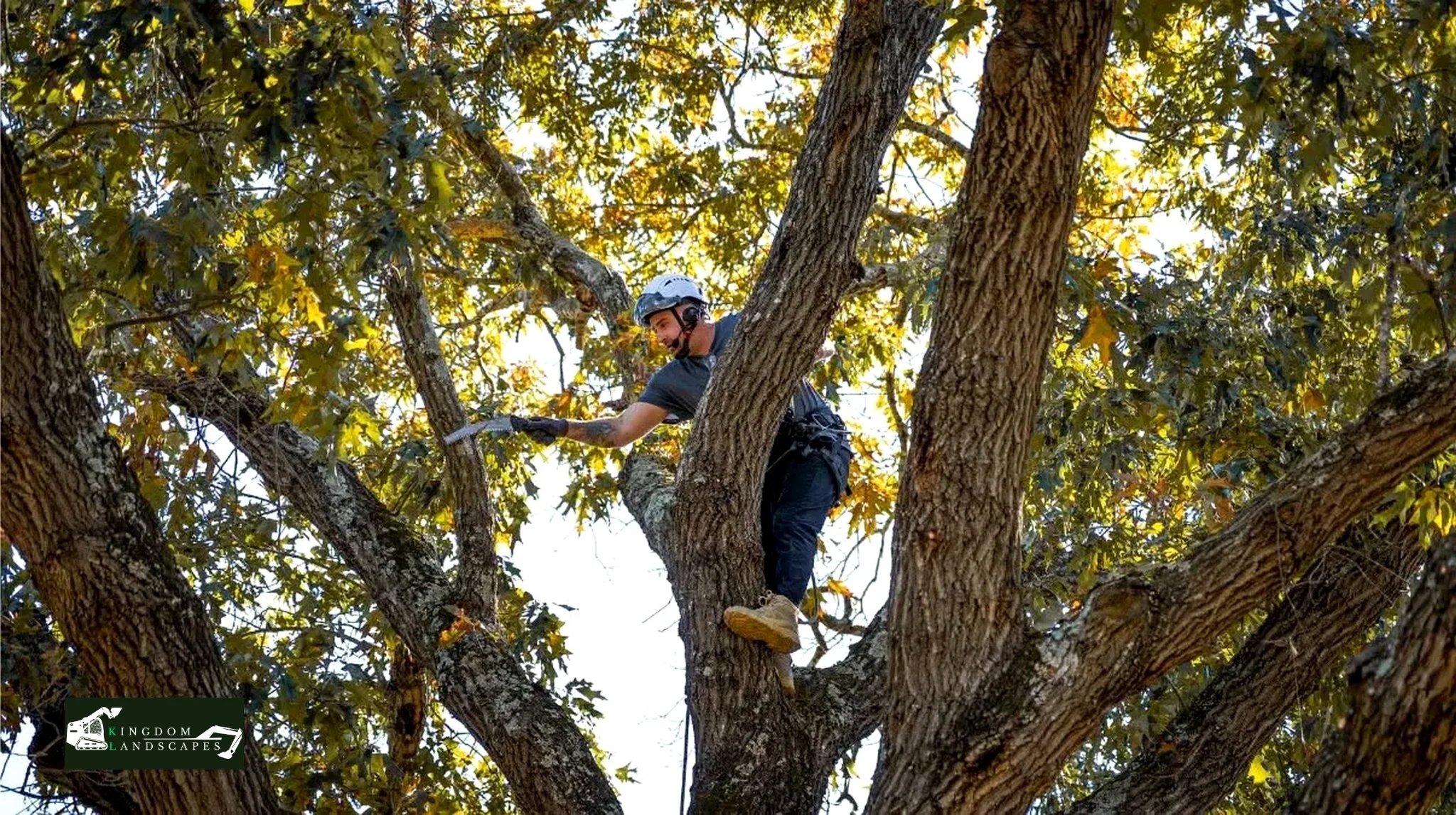
Some trimming tasks are safe for homeowners, but many are not. Tall branches, large limbs, trees near power lines, and diseased specimens require professional tools and training. If a cut could fall on a structure or if the tree’s stability is uncertain, it’s better to call in the experts.
Professional help is especially valuable when the job involves multiple landscape needs. A tree that's too crowded may also need land clearing, drainage correction, or storm cleanup. A coordinated approach saves time and prevents repeated disruptions.
Don’t Over-Prune
More pruning isn’t always better. Removing too much at once can stress the tree, reduce food production, and trigger weak regrowth. It can also expose bark to sunscald or create large wounds.
A good rule is to trim with a specific purpose: remove dead, diseased, or damaged wood; improve structure; and restore safe clearance. Trimming should support the tree’s natural form, not fight against it.
When It’s Time to Remove a Tree
Signs the Tree Can’t Be Saved
Sometimes, trimming is no longer enough. If too much of the canopy is dead, the trunk has major decay, or the tree is dangerously leaning, removal might be safer. Trees with structural failures can collapse even after minor pruning.
Other warning signs include frequent branch drop, root damage, pest infestation, or visible splits in the trunk. In these cases, trimming may only be a temporary fix. A professional assessment can help decide if removal is the next step.
Protecting the Surrounding Area
When a failing tree needs removal, consider the surrounding area. Roots, stumps, and debris can affect grading, drainage, and yard usability. Coordinated services make a big difference here.
For a full reset after tree work, tree and stump removal can be paired with land clearing to prepare for new plantings or improvements. Sometimes, following up with concrete work or drainage-focused grading helps restore function and appearance.
FAQs About Urgent Tree Trimming
How Often Should Trees Be Checked?
Most trees should be inspected at least once a year, with more checks after major storms. Fast-growing trees or those near homes, driveways, or walkways might need more attention. If you see dead limbs or crowded canopies, don’t wait for the annual check-up.
Can I Trim My Neighbor’s Overhanging Branches?
In many areas, you can trim branches crossing your property line, but laws vary, so always check local rules. It’s usually best to talk to your neighbor before cutting. If the tree is large or valuable, professional advice is safest.
What If I’m Unsure If a Tree Is Diseased?
If you’re unsure, look for signs like discolored leaves, peeling bark, cankers, or unusual dead spots. These may indicate a health issue needing more than routine care. An arborist can confirm whether the problem is cosmetic, structural, or disease-related.
Does Trimming Help with Mildew and Fungal Pressure?
Yes, better air circulation and sunlight can reduce fungal growth conditions. This is especially useful in humid climates where moisture stays in dense canopies. Better airflow also helps leaves dry faster after rain, supporting overall tree health.
Wrap-Up: Keep Your Trees and Property Safe
Knowing when your trees need trimming is easy once you know what to look for: dead limbs, diseased wood, damaged branches, rubbing growth, poor airflow, and branches touching your home. Taking action early can prevent accidents, improve tree health, and keep your yard looking great. And timely pruning can help you avoid costly damage before the next storm.
If you need expert help, Kingdom Landscapes is here with professional tree care and solutions tailored to your needs. Whether you need selective trimming, cleanup, or a larger site improvement plan, our team can help you move forward confidently. Learn more about our tree and stump removal and related services, or check out our local Coats, NC service area to get started.
For a safer, healthier yard, don’t wait until a small branch problem becomes a major emergency. Contact Kingdom Landscapes at 919-701-8105 or email Contact@Kingdom-Landscapes.com to schedule your consultation and protect your property the right way.