Why Proper Grading Is Essential for Your Property
Proper grading goes beyond just evening out your yard's surface. It's crucial for protecting your home, improving drainage, preventing erosion, and enhancing your landscaping. In Coats, NC, dealing with unique soil and weather conditions makes grading especially important for any property maintenance or renovation plan. Let’s explore why grading matters, the latest trends, step-by-step practices, and how Kingdom Landscapes can offer solutions that preserve your property's value and safety.
Whether you're gearing up for a new construction, planning a landscape upgrade, or dealing with water issues, understanding grading principles can save you from costly repairs down the road. If you're looking for expert guidance on shaping and draining your property, our grading services offer custom, code-compliant solutions that work with local soils and rainfall patterns. Plus, we'll share best-practice insights from trustworthy sources to help you choose wisely and ask the right questions when hiring contractors.
In this article, we’ll break down technical jargon into plain language, share practical steps you can take, and show real-world examples of the impact proper grading makes. We’ll reference reputable resources on stormwater management and soil conservation to give you confidence in the suggested techniques. Interested in how grading fits into larger projects? We’ll also discuss complementary services like land clearing and trenching that often go hand-in-hand with grading work.
Understanding the Basics: What Is Grading and Why It Matters
Definition and primary goals of grading
Grading involves reshaping the land surface to control water flow, create stable areas for building, and prepare for landscaping. The main goals are to direct water away from buildings, reduce erosion, stabilize soil, and create functional, attractive surfaces for lawns, gardens, patios, and driveways. Proper grading considers how water moves across a site during rain and storms, providing a long-term framework for a healthy property.
Without proper grading, water can pool near foundations, damage pavements, and stress plants. Besides drainage, grading determines how easy it is to install irrigation, lay sod, or build retaining walls. A well-planned grading approach saves money on repairs and reduces the risk of damage during heavy rains.
Grading also helps protect the environment by reducing sediment transport and safeguarding nearby waterways. For municipal guidance on managing stormwater, check out the EPA’s Green Infrastructure resources.
How grading affects structural integrity
How soil and water interact with a foundation directly affects structural integrity. Poor grading that lets water pool near a foundation increases pressure and can lead to basement leaks or foundation cracks. Ensuring the ground slopes away from structures reduces these risks and protects your home’s structure and indoor air quality.
Engineers and landscape pros coordinate grading with foundation plans to ensure stability. A well-executed grade provides a consistent surface for walkways, pavements, and patios, reducing the chance of settlement or misalignment over time. Compaction, drainage, and suitable backfill materials are all part of ensuring structural safety.
In areas with clay soils, like parts of North Carolina, grading must consider soil movement during wet and dry cycles. Adaptive grading solutions can mitigate the effects of soil expansion and contraction on structures and paved surfaces. That’s why hiring contractors familiar with local soil behavior is key.
Environmental and aesthetic benefits
Beyond structural protection, grading offers environmental and aesthetic benefits that enhance property enjoyment and value. Thoughtful grading can create level terraces for outdoor spaces, improve lawn health by eliminating standing water, and reduce erosion that threatens plantings. Grading sets the foundation for sustainable landscaping choices like xeriscaping and native plantings.
Integrating swales, berms, and French drains into grading plans helps manage runoff and reduce downstream erosion. These techniques can also increase infiltration, recharge groundwater, and support healthier plant roots. Properly finished grades make mowing easier and enhance curb appeal and resale value.
When planning aesthetic improvements, coordinate grading with hardscaping and softscaping features so that patios, walkways, and planting beds work with drainage elements instead of against them. Our blog on landscaping tips to boost curb appeal outlines how grading complements landscape design.
Local Factors to Consider in Coats, NC
Soil types and how they influence grading plans
Coats, NC, typically has clay-heavy soils, which present specific challenges for grading and drainage. Clay soils have low permeability, meaning water moves slowly and can lead to shallow flooding and poor plant root conditions. A grading solution for clay soils must focus on surface drainage and consider subsurface drainage options.
Contractors often suggest adding organic matter or sand to improve the structure for planting beds, but large-scale amendments are rarely feasible. Instead, controlling surface grade and providing suitable drainage outlets is the most reliable method. Professional grading services assess soil compaction, infiltration rates, and existing drainage patterns before deciding on excavation, fill, or drainage installations.
When dealing with clay soils, avoid excessive compaction around tree roots and planting zones. Machinery used for grading should be operated carefully near vegetation. Methods like building tree protection zones or using alternative access routes can protect root systems. For jobs requiring tree work, coordinate grading with certified arborists or our tree and stump removal team to protect plantings.
Rainfall patterns and runoff expectations
Seasonal rainfall in this region means properties can experience intense storms and prolonged wet periods, testing grading designs. Effective grading directs water to safe discharge points, like storm drains or permeable areas. Knowing local rainfall helps design grades and drainage systems sized to handle flows without erosion.
Local contractors often use historical rainfall data and site observations to model runoff. Combining grading with detention features can slow runoff and reduce peak flows that stress downstream infrastructure. State or municipal guidance may specify discharge points and erosion control measures during construction to prevent negative impacts to neighboring properties and public waterways.
For those concerned with regulatory compliance, resources from state extension services and conservation agencies guide managing runoff and protecting soil resources. Consider consulting these sources when planning larger projects or working near sensitive areas.
Permitting, easements, and neighbor considerations
Grading sometimes requires permits or coordination with authorities, especially if work affects stormwater infrastructure or public easements. Before major grading or excavation, verify local ordinances and required permits with the county or municipal planning department. Permitting ensures your project meets safety and environmental requirements and avoids costly corrective work later.
Working near property lines or shared drainage courses requires communication with neighbors and potentially agreements if grading alters shared runoff patterns. Good contractors will document changes and prepare engineered plans to manage water responsibly. Transparent communication can prevent disputes and maintain good neighborhood relations during construction.
When in doubt about permitting, reach out to local planning offices or consult professionals who handle these approvals. This proactive step reduces the risk of project delays and ensures your grading solution is durable and compliant.
Latest Trends and Technologies in Grading
Precision equipment and digital planning
Modern grading benefits from precision equipment and digital tools that improve accuracy and efficiency. Laser-guided graders, GPS-enabled machinery, and site modeling software allow contractors to cut and fill land with precision, reducing over-excavation and the need for excessive fill material. These technologies also shorten project timelines and help create consistent slopes.
Digital site models enable contractors to simulate water flow under various storm scenarios and adjust grades to optimize drainage. The result is predictable performance, fewer changes in the field, and better coordination with other trades like concrete installers or irrigation teams. Investing in precision methods can lower costs by minimizing repair needs caused by grading errors.
By using technology to map existing site elevations and plan grading operations, professionals can also identify sensitive areas to protect, such as mature trees or root zones. Combining technological planning with on-the-ground expertise results in grading that handles water effectively while preserving valuable landscape assets.
Sustainable grading practices
There’s a growing focus on sustainable grading practices that minimize environmental impact while achieving functional results. Strategies include preserving natural flow paths, retaining topsoil for reuse, using vegetative buffers to slow runoff, and incorporating permeable surfaces where possible. Sustainable grading also prefers gentle contours that work with natural drainage patterns instead of aggressively reshaping the landscape.
Techniques such as vegetated swales, bioswales, and constructed wetlands can be integrated into grading plans to treat and slow runoff naturally. These approaches reduce pollutant loads downstream and provide habitat benefits. Sustainable grading often pairs well with xeriscaping and native plantings for low-maintenance landscapes.
Local projects that prioritize sustainability may qualify for incentives or grants aimed at water-quality improvements. Check with state conservation offices for available programs. Our related post on sustainable landscape practices explores how grading and planting choices combine to make resilient outdoor spaces.
Integration with other site services
Grading rarely stands alone. It’s often coordinated with land clearing, trenching, excavation, and hardscaping to produce a comprehensive result. For example, proper land clearing prepares the site for grading by removing unwanted vegetation and organic matter, while trenching services can install subsurface drains or utilities that affect grading. Coordinating these services improves efficiency and prevents rework.
Kingdom Landscapes provides integrated solutions that combine land clearing, trenching services, and grading so that every element of the site plan aligns with drainage and planting goals. This holistic approach reduces project complexity and ensures that the finished landscape functions as intended.
When planning improvements, ask contractors about their capability to manage related services under one schedule. This often shortens project timelines and reduces the number of subcontractors moving through your property, protecting existing features and minimizing disturbance.
Best Practices and Professional Techniques
Establishing proper slopes and distances
One of the foundational practices in grading is establishing proper slopes that move water away from structures. A widely recommended guideline is to ensure the ground slopes at least one inch per foot for the first 5 to 10 feet away from a house. This slope reduces the chance of water migrating toward the foundation. MMSD guidance provides practical examples demonstrating this approach.
For larger properties or sites with complex topography, engineers may specify different slopes across terraces, driveways, and planting beds to balance erosion control and usability. Professionals use contour maps and spot elevations to design these slopes accurately, ensuring drainage features like swales or French drains connect properly to discharge locations.
Remember that slopes too steep can create erosion problems. Where slope is unavoidable, use erosion control measures like native groundcovers, erosion blankets, or retaining structures to stabilize the soil.
Protecting trees and planting zones during grading
Trees are sensitive to soil changes. Piling soil around trunks or compacting root zones can lead to bark decay and root suffocation. Best practices recommend keeping original soil levels around trunks and avoiding excavation that severs major roots. Where grading must occur near trees, create protective barriers, minimize heavy machinery within the dripline, and consult arborists to evaluate risks beforehand. Plant health guidance stresses maintaining root health during grading and landscape construction.
Slight slopes around trees can be used to encourage surface drainage without creating excessive soil cover against stems. When fill is required, use engineered solutions like root bridges or raised planting beds to avoid compressing root systems. Careful coordination between grading crews and tree care professionals preserves trees that are valuable for shade, property value, and ecological benefits.
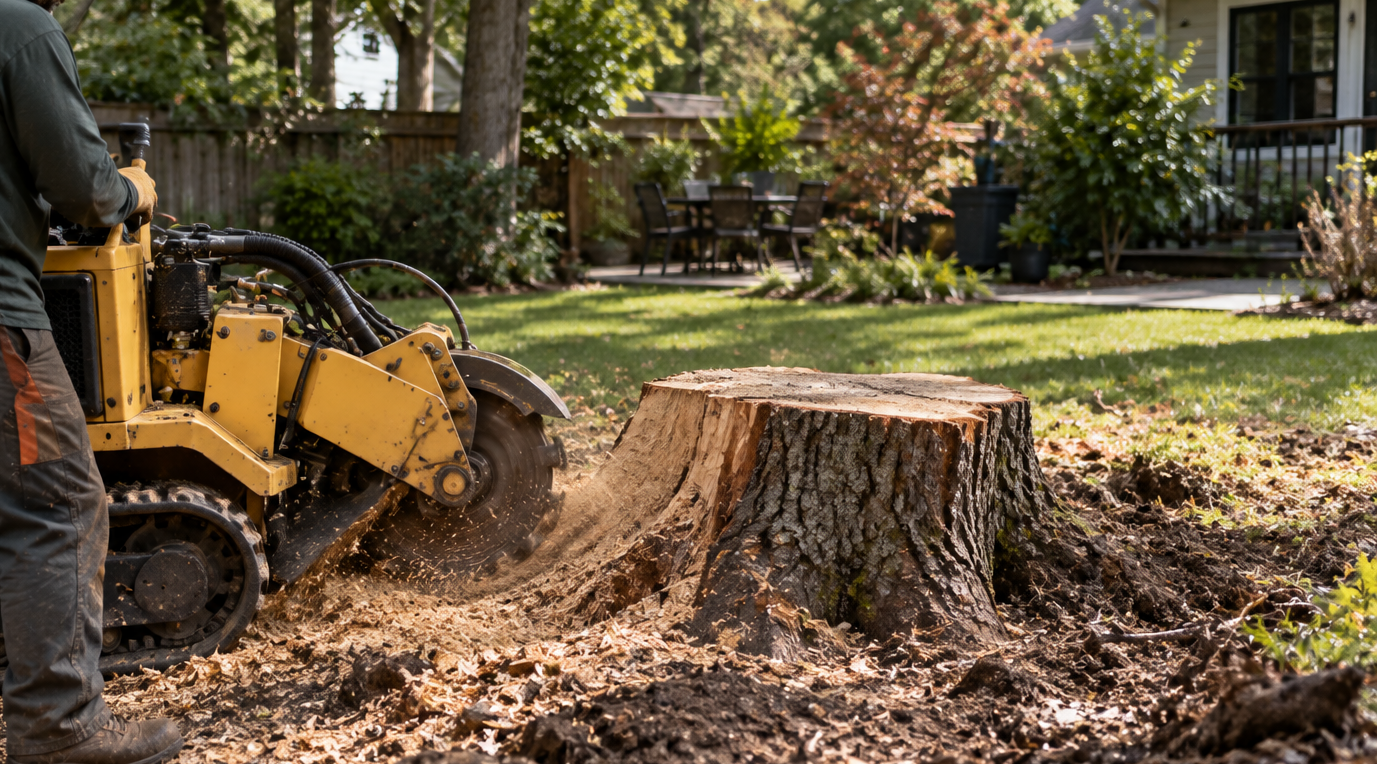
When trees must be removed for grading or construction, consider professional removal and stump grinding followed by appropriate restoration work to ensure the resulting grade supports healthy new plantings or hardscape installations.
Common drainage solutions: French drains, swales, and berms
Effective grading often includes specific drainage features to manage water flows. French drains use a perforated pipe wrapped in gravel and filter fabric to collect and carry subsurface water away. Swales are shallow, vegetated channels that convey surface runoff slowly while promoting infiltration. Berms are raised earth forms that redirect or block water flow when placed strategically in the landscape.
Choosing the right combination of these features depends on soil type, slope, and available discharge locations. For example, in clay soils that resist infiltration, swales may be paired with underdrains to convey excess water to a storm system or suitable outfall. Professional designers size and locate these features to handle expected flows without causing downstream impacts or erosion.
When done correctly, these drainage elements are low-maintenance, visually integrated into the landscape, and effective at preventing standing water and protecting structures from moisture intrusion.
Step-by-Step Guide: What to Expect from a Professional Grading Project
Initial site assessment and planning
The first stage of any grading project is a thorough site assessment to document current elevations, soil types, drainage patterns, and existing vegetation. Professionals walk the property, take spot elevations, review any available survey data, and note issues like erosion, pooling, or foundation moisture stains. This assessment informs a grading plan that balances structural needs, aesthetics, and environmental compliance.
At this stage, homeowners should discuss objectives with their contractor, such as preparing for a patio, improving lawn drainage, or creating a planting terrace. Clear project goals help contractors develop a plan that aligns grading with broader landscape design. Many contractors also provide conceptual sketches or digital models to preview proposed grades before work begins.
Make sure to ask for clarification on how the contractor will protect trees, fences, and utilities during grading and whether permits or notifications are required for the scope of work.
Excavation, fill placement, and compaction
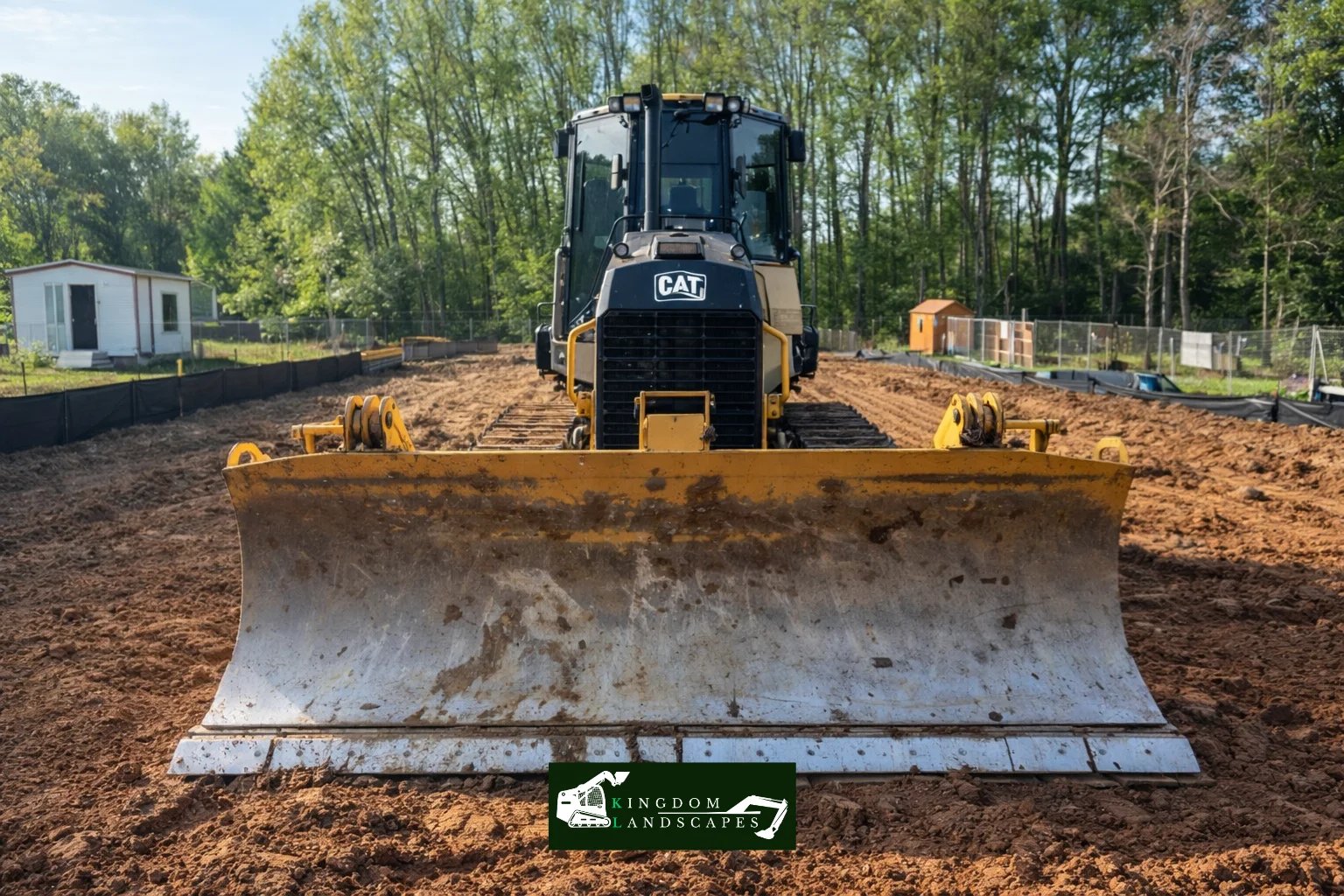
Once a plan is approved, the execution phase typically includes excavation of high spots, placement of engineered fill where needed, and careful compaction to achieve stable surfaces. Proper compaction is essential to prevent settling and to provide a uniform base for lawns, driveways, and structures. Contractors use compaction tests or follow standard compaction specifications to confirm the ground meets performance requirements.
Fill materials should be selected to match the structural and drainage goals of the project; unsuitable fill can lead to future stability issues. When topsoil is removed, contractors often set it aside for reuse on planting areas to preserve organic content and improve final landscaping results. Attention to sequencing, protecting topsoil, rough grading, compacting, and then final grading ensures a durable finished grade.
For extensive projects, coordinating utility marking and trenching for drainage or irrigation is critical before final compaction and finishing work. This prevents destructive rework and keeps the schedule on track.
Final grading, stabilization, and planting
The finishing phase includes creating the final surface, seeding or installing sod, placing mulch in beds, and implementing erosion control measures. Final grading focuses on detail: smooth transitions, precise slopes adjacent to foundations, and integration of drainage inlets. Stabilization steps such as seeding with erosion-control seed mixes, installing silt fences during construction, and planting groundcovers reduce short-term erosion risks.
Planting and landscape installation should follow final grading so that root zones are not disturbed after grading. If hardscape is part of the project, coordinate with concrete or paver crews to ensure grades match design elevations for finished surfaces like patios, walkways, and driveways. Our concrete work team can collaborate with grading crews to align elevations and drainage for long-lasting results.
After planting, ongoing irrigation and monitoring during the first growing season help establish vegetation that will stabilize soil and enhance the appearance of your newly graded landscape.
Maintenance, Troubleshooting, and Long-Term Care
Routine inspections and seasonal checks
Grading is not a one-time activity; regular inspections help ensure grades continue to function as intended. Inspect your property after heavy rains to check for new erosion, standing water, or areas where soil has been displaced. Seasonal checks before and after winter and spring can catch problems early, such as compacted spots, clogged drains, or settling near foundations.
Documenting concern areas and addressing them quickly prevents small problems from escalating into larger structural issues. If you identify pooling near a foundation or persistent soggy zones, contact a professional to evaluate whether additional drainage features or regrading are needed. Prompt action protects plant health and prevents costly repairs.
Routine maintenance tasks include cleaning grates and inlets, re-seeding bare spots, and ensuring French drain outlets remain clear. For properties with steep slopes, maintain vegetative cover and consider adding erosion control blankets after severe weather events to support recovery.
Common problems and practical fixes
Common grading problems include ponding, erosion gullies, soil slumping, and foundation seepage. Small-scale ponding can often be resolved with localized regrading and the installation of a French drain or dry well to intercept and redirect water. For erosion gullies, regrading combined with erosion control mats and re-vegetation restores stability and prevents further scour.
Where water infiltration threatens building foundations, solutions may include regrading the immediate area, installing perimeter drains, or adding gutters and downspout extensions that move roof runoff safely away from the structure. Foundation issues should be evaluated by a structural professional in addition to grading contractors to determine the most effective remedial action.
If repeated problems occur, it may indicate a larger site drainage issue that requires redesigning how water moves across the property, often involving engineered solutions and coordination with neighbors or municipal systems.
When to call a professional
Call a professional when grading changes are extensive, when trees or utilities are at risk, or when structural damage is already evident. Professionals bring equipment, expertise, and knowledge of local soils and regulations that homeowners typically do not have. Complex problems such as persistent foundation seepage, major erosion after storms, or grading that affects neighboring properties should always be handled by licensed contractors or engineers.
Kingdom Landscapes offers assessments that identify root causes and recommend targeted solutions, from small regrades to comprehensive drainage system installations. If you are preparing for construction, landscaping, or tree removal, coordinating grading with other services ensures a smooth project and protects long-term property value. Consider combining grading with other necessary services like debris and brush removal to prepare the site properly before work begins.
Case Studies and Real-World Examples
Residential turnaround: resolving foundation pooling in Coats
In one local residential example, recurring basement moisture prompted an investigation that revealed the yard sloped toward the foundation, and clay soil prevented infiltration. After a professional assessment, crews implemented a regrade that established the recommended slope away from the house for the first ten feet, installed a perimeter French drain, and added downspout extensions to convey roof runoff. The result eliminated the basement moisture, reduced mold risk, and increased usable yard space for the homeowners.
The key lessons from this case were the importance of addressing both surface and subsurface water, protecting existing trees during machinery access, and using a staged approach that combined grading with drainage infrastructure. Long-term monitoring showed improved foundation dryness and healthier lawn growth after the intervention.
This is a typical example of how grading and drainage work together to solve complex water management problems and protect property assets over time.
Landscape renovation: creating functional outdoor living spaces
Another example involved a property that required multiple terraces for a new patio, lawn, and planting beds. The grading plan established level areas for hardscaping, integrated swales to move runoff away from seating areas, and preserved mature trees by using root-friendly excavation methods. Finished terraces included compacted bases suitable for pavers and well-draining planting mixes for beds, creating a durable and attractive outdoor living area.
This case highlights the value of integrated planning where grading sets the stage for successful landscaping and long-term usability. Working with contractors who can coordinate grading, tree care, and concrete work produced a cohesive result that added immediate enjoyment and long-term value to the home.
For similar projects, combining services like concrete work and professional grading from the outset streamlines timelines and ensures drainage and surface elevations align with design goals.
Large-site preparation: land clearing and grading for construction
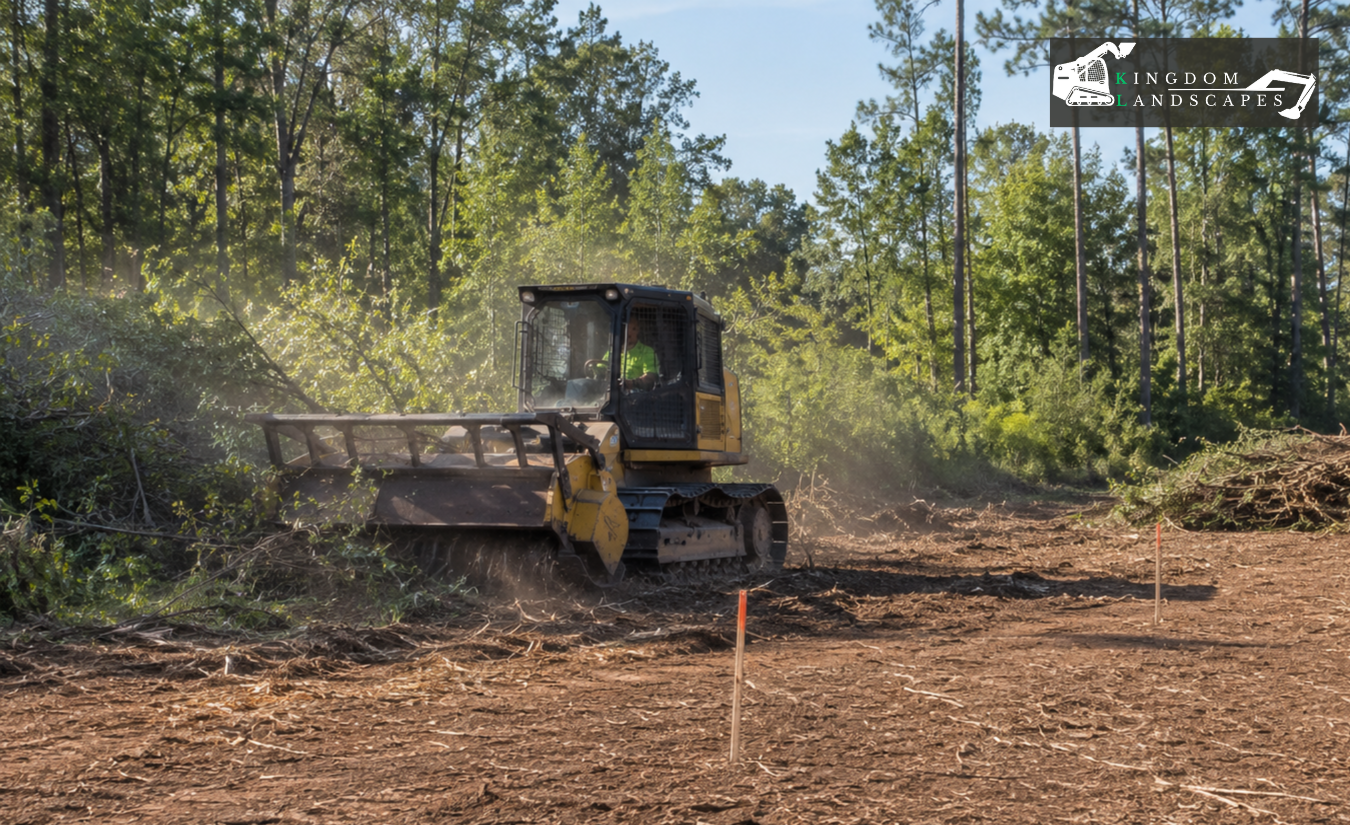
On larger parcels, grading is often paired with land clearing and excavation to prepare building pads and access roads. One development project required clearing dense brush, relocating topsoil for reuse, and performing mass grading to create level areas for foundations and utilities. Trenching for drainage and utility lines was coordinated with grading to keep subsurface work from damaging completed grades. The integrated approach minimized delays and reduced overall earthmoving costs.
Mass grading projects require careful erosion control planning during construction to protect downstream waterways and comply with regulatory requirements. This is why partnering with experienced teams that understand sequencing, sediment control, and revegetation practices is essential for successful outcomes. Using local expertise prevents common mistakes that can lead to non-compliance and remediation costs.
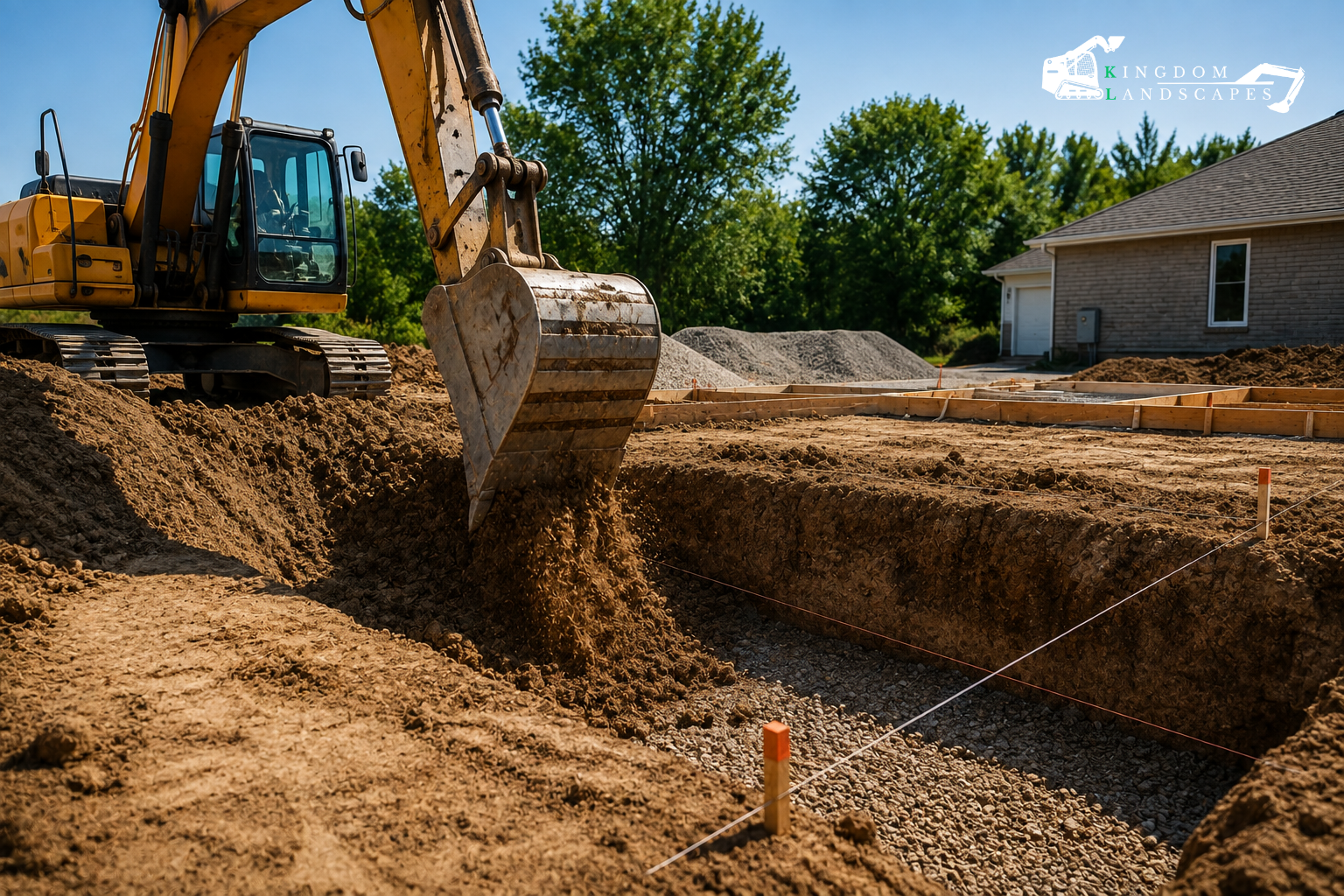
When planning construction or large landscape renovations, consider engaging a team capable of delivering land clearing, grading, and excavation in a coordinated workflow for maximum efficiency. Kingdom Landscapes provides combined services, including ground excavation to support these complex projects.
Frequently Asked Questions (FAQ)
How do I know if my property needs grading?
Signs that your property needs grading include water pooling near foundations, ongoing drainage issues, visible erosion channels, soggy lawns, and basement or crawlspace moisture. If you notice uneven settlement or repeated plant failure in certain areas, it may indicate poor surface drainage or compacted soils. A professional inspection can determine whether minor regrading or more extensive drainage solutions are necessary.
Minor adjustments like adding 3 to 6 inches of fill and shaping a small slope can sometimes be handled as a DIY project, but larger changes that affect structures, trees, or utilities should be handled by professionals. Homeowners should also be mindful of local permits and neighbor impacts before undertaking significant grading work.
Can grading damage trees, and how can that be avoided?
Yes, improper grading can damage trees by burying trunks, severing roots, or compacting the root zone. To avoid harm, maintain original soil levels near trunks when possible, create root protection zones, and use alternative access methods around trees. If fill is necessary, consider building raised beds or using root-friendly techniques and consult an arborist to evaluate the tree’s tolerance to grading activities. Preserving healthy trees is often far more valuable than removing them and starting over.
What are typical costs and timelines for grading projects?
Costs vary widely depending on site size, complexity, soil conditions, and the need for drainage structures or permits. Small residential regrades can be completed in a day or two, while larger projects with excavation, drainage installation, or coordination with other trades may take several days to weeks. Get multiple quotes, ask for itemized proposals, and confirm that proposals include erosion control, compaction standards, and cleanup to avoid surprise costs later.
Conclusion and Next Steps
Proper grading is an essential investment in your property’s structural integrity, drainage performance, and long-term value. Especially in areas with clay soils and variable rainfall, like Coats, NC, tailored grading solutions reduce risks, support healthy landscapes, and enhance the usability of outdoor spaces. Advances in precision equipment and sustainable practices have made modern grading more effective and less invasive than traditional approaches.
If you are experiencing drainage issues, planning a landscape renovation, or preparing a site for construction, start with a professional assessment that considers soil conditions, existing vegetation, and intended uses. Kingdom Landscapes provides experienced, faith-driven service that coordinates grading with land clearing, trenching, and excavation to deliver reliable, long-lasting results. Reach out to schedule an on-site evaluation and get a clear plan and estimate for your project.
Contact Kingdom Landscapes at 919-701-8105 or Contact@Kingdom-Landscapes.com to discuss grading solutions and related services. Protect your investment, preserve valuable trees, and enjoy a healthier, more functional landscape with professional grading done right. For more reading on foundational topics like land clearing and when to prepare sites for landscaping, see our article on professional land clearing.
Additional authoritative resources: the U.S. Environmental Protection Agency’s work on green infrastructure offers guidance on managing stormwater at the property scale, while the USDA Natural Resources Conservation Service provides technical resources for soil and erosion control. USDA NRCS and Wikipedia: Land grading are good starting points for technical background and broader context.